Fire & Emergency Services
Fayette County's combined Fire and Emergency Medical Services provides the citizens of Fayette County with high quality emergency services. Learn more about our qualifications and services below.
Fire Services
The Fayette County Department of Fire and Emergency Services is a combination fire suppression and emergency medical response department that responded to 11,566 fire and EMS calls in 2023. The department responds to an area approximately 160 square miles and includes all unincorporated areas, the Towns of Tyrone, Brooks, and Woolsey and provides emergency medical services to the citizens of Fayetteville. There are 146 total operational employees that are divided into three shift battalions. Each shift battalion works a 24-hour shift. On duty personnel respond from 9 strategically located stations throughout the county and serve a population of approximately 98,000 residents. They routinely respond to residential and commercial structure fires, brush fires, vehicle accidents as well as all requests from the public to respond to a variety of other types of emergencies. All our firefighters are cross-trained as both Firefighters/A-EMTs, or Firefighter/Paramedics and all our fire apparatus are equipped with emergency medical equipment. Thanks to this cross training and the medical equipment carried, all the department's fire apparatus are licensed first responders. It is routine for a fire apparatus to respond to an emergency medical call with trained medical personnel and equipment on board if that fire truck is the closest unit or extra personnel are needed. The department is proud to have an average rapid response to emergencies in our community of just over 5 minutes.
In addition to suppressing fire and responding to emergencies our firefighters are busy in their response areas conducting business inspections, ensuring that fire hydrants are in working order, working on pre-fire plans of business, as well as maintaining the station that they are assigned. Our firefighters also conduct public relations events to educate the public about fire safety and about our department.
All emergencies should be reported by calling 911 so that they can dispatch the appropriate vehicle to your emergency.
Emergency Medical Services
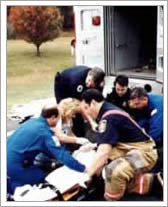
The Emergency Medical Services department is dedicated to providing the highest quality pre-hospital emergency care to all citizens and visitors of Fayette County. We pride ourselves in providing time sensitive care through a professional and compassionate delivery.
The department's Paramedics and Advanced Emergency Medical Technicians (AEMT) are Licensed through the state of Georgia and maintain certification through the National Registry of Emergency Medical Technicians. Crews routinely respond to traffic accidents, cardiac emergencies, medical emergencies, trauma, and other types of emergencies. The department utilizes 7 Advanced Life Support (ALS) ambulances, as well as 2 in reserve. Daily staffing of each ambulance at a minimum, includes a paramedic and an AEMT. All ambulances are equipped with state-of-the-art advanced equipment including: 12 lead EKG cardiac monitoring, portable ventilation, video laryngoscopy, automatic CPR chest compressors, and advanced trauma equipment to manage all types of emergencies. The department also equips all fire engines and the squad units as ALS first responder units. These vehicles are often seen at emergency scenes providing the same level of care as our ambulances.
The care of patients begins with Emergency Medical Dispatch (EMD) via a 911 communications officer when calls are received. EMD provides instructions on initial care prior to the arrival of our crews. Once on scene of the emergency, crews quickly assess the patient, initiate a treatment plan, and transport to the most appropriate hospital. Factors which determine the most appropriate hospital include acuity level of the injury/illness and the need for specialized resources for trauma, stroke, cardiac care, and pediatrics.
Emergency Management
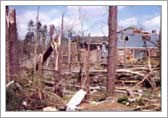
The Fayette County Department of Fire and Emergency Services is the designated emergency management agency for our community. This division of the department proved to be very effective especially when Fayette County was declared five different times as disasters areas by the Federal Emergency Management Agency. Floods, tropical storm, straight line winds, hail, and heavy snowfall left citizens looking to emergency management for assistance.
Utilizing the Integrated Emergency Management System, the division was able to adequately meet the needs of our community. The division also is responsible for coordination of the Fayette County Resource Council and LEPC. The program has twice been recognized for its exemplary practices by the Federal Emergency Management Agency. Mitigation, preparedness, response and recovery activities, public information, and the coordination of the Emergency Operation Center are also the responsibility of the division of Emergency Management.
The Department is also the Homeland Security Agency for Fayette County. Partnering with many local law enforcement, fire and EMS agencies, public health, state and federal organizations, the Department has and is continuing to coordinate efforts to identify, plan for and mitigate possible terrorism against critical infrastructure and our community.
